2026-05-25
Functional Rhinoplasty: Causes and Necessity Must Also Be Considered!
Hello. This is Vibe Plastic Surgery. Rhinitis is a chronic and common condition, known to affect about 70% of Koreans. While it can be treated with medication, if symptoms do not improve despite treatment, it is highly likely due to a structural abnormality inside the nose rather than allergic rhinitis. This is because representative internal nasal structural disorders like a deviated septum and nasal valve collapse are highly likely to cause rhinitis.

Hello.
This is Vibe Plastic Surgery.

Rhinitis is known to affect about 70%
of the Korean population,
making it a chronic and common condition.
While it can be effectively treated with medication,
if symptoms do not improve despite treatment,
it is highly likely not allergic rhinitis,
but rather a structural abnormality inside the nose.
This is because representative internal nasal structural disorders,
such as a deviated septum and nasal valve collapse,
are highly likely to cause rhinitis.

What is a Deviated Septum?
It refers to a condition where the septal cartilage,
which divides the inside of the nose into two sides, is bent.
The nose can become bent due to external trauma
or it can be a congenital condition.
During the growth process, the septum may grow excessively,
creating asymmetry and leading to
a deviated septum.
What is Nasal Valve Collapse?
It refers to a condition where the nasal valve,
a narrow space in the nose that regulates breathing and airflow,
becomes severely narrowed and collapses.
In this case, breathing becomes difficult,
leading to nasal congestion and chronic rhinitis.
Can functional rhinoplasty also improve rhinitis?
To give you the conclusion,
functional improvements can definitely be achieved.
Structural rhinitis is primarily caused by structural issues
such as a deviated septum, hypertrophied turbinates, or nasal valve collapse.
In cases of rhinitis induced by these factors,
improvement can be expected through surgery.
Therefore, along with cosmetic nose surgery,
functional improvements—namely, correcting a bent septum,
reducing hypertrophied turbinates, and widening a narrowed nasal valve—
can help alleviate rhinitis through these processes.
Functional rhinoplasty is recommended for these people:

✔ Those who frequently experience nasal congestion in daily life
✔ Those with a crooked nose accompanied by nasal congestion
✔ Those who have difficulty breathing due to a deviated nose
✔ Those whose nasal septum is fractured or misaligned due to trauma
Things to Check during Functional Rhinoplasty
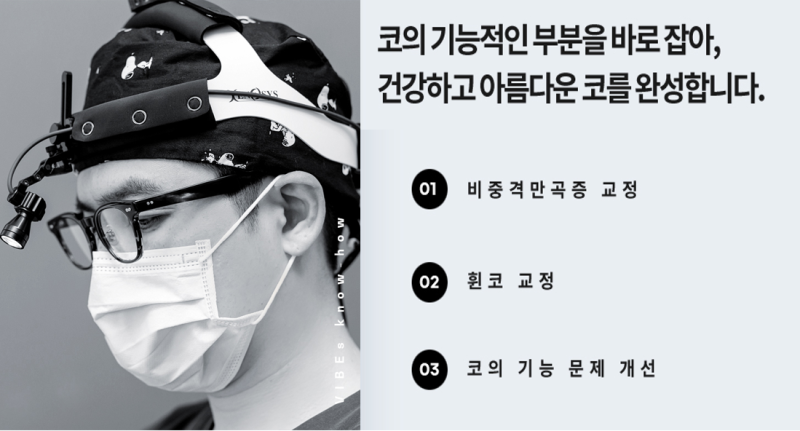
If a deviated septum, which can cause
a crooked nose and nasal congestion, is not corrected
before performing rhinoplasty, there may be limitations
in creating the ideal nasal proportions and lines.
Therefore, Vibe Plastic Surgery
does not just address the externally crooked parts during functional rhinoplasty.
By straightening the bent portion of the septum first,
we reduce the possibility of the nose becoming crooked later and improve nasal congestion,
creating a healthy and beautiful nose.

At Vibe,
we consider not only the aesthetic aspects but also the functional aspects
to design the most appropriate surgical method and line.
If you are considering functional rhinoplasty,
where we pursue naturalness without overdoing it,
we invite you to Vibe Plastic Surgery
for a consultation.





Frequently Asked Questions
My rhinitis doesn't improve with medication. What could be the cause?
It's highly likely to be an abnormality in the internal structure of the nose, rather than allergic rhinitis. Conditions such as a deviated septum, where the cartilage dividing the inside of the nose is bent, or nasal valve stenosis, where the airway narrows, can cause chronic rhinitis and nasal congestion.
Does functional rhinoplasty really improve rhinitis symptoms?
Yes, it can significantly improve functionally. If rhinitis is caused by structural problems such as a deviated septum, hypertrophied turbinates, or nasal valve stenosis, surgery can correct the bent septum and widen the narrowed nasal valve, thereby improving rhinitis symptoms.
Why does deviated septum occur?
Both congenital and acquired factors can be causes. The cartilage can bend due to trauma from external impact or congenitally, and it can also occur during the growth process when the nasal septum grows excessively, leading to asymmetry.
Who is functional rhinoplasty recommended for?
It is recommended for those who frequently experience nasal congestion or difficulty breathing. Additionally, individuals with a crooked nose accompanied by nasal congestion, or those whose nasal septum has been fractured or twisted due to trauma such as external impact, can expect good results from functional rhinoplasty.
Is it necessary to correct a deviated septum along with rhinoplasty?
Yes, it is advisable to correct them together to address the root cause. If only the outer crooked part of the nose is operated on without correcting the internal deviated septum, there are limitations in creating the nose's proportion and line, and there is a possibility of the nose becoming crooked again in the future.