2026-05-18
Characteristics and Considerations of Rhinoplasty Explored Through Rhinoplasty Reviews
Rhinoplasty is a highly difficult surgery as the nose is located in the center of the face, making even small differences noticeable. It is important to consider not only the external appearance but also the internal structure, such as a deviated septum, and the harmony of soft tissue, cartilage, and bone. Deviated nose correction has high satisfaction but is highly difficult, while bulbous nose correction may have limitations depending on skin thickness, requiring expectation management. To red


Hello, this is Vibe Plastic Surgery :)
During consultations, we find that many people
visit us after looking up various rhinoplasty reviews.
Many patients come in after checking the results in advance through actual reviews,
or they come prepared with questions
about nose surgery. However,
because rhinoplasty is a more delicate and
highly difficult surgery than expected,
it is important to understand the characteristics of the surgery and the aspects to consider,
rather than judging solely based on before-and-after photos or rhinoplasty reviews.
Today, we would like to talk about why rhinoplasty is a difficult surgery
and what points are good to look for
when reading rhinoplasty reviews.💜
Is rhinoplasty a difficult surgery?

Rhinoplasty is more difficult than you might think.
Because the nose is located in the exact center of the face, even a slight misalignment
or crookedness is easily noticeable.
That is why many people look up various
rhinoplasty reviews while contemplating surgery.
📍 External Aspects
Nose line, height, and overall balance
📍 Internal Structure
Structural issues inside the nose, such as a deviated septum
If you have a deviated septum (where the nasal septum is bent, causing left-right asymmetry),
the surgery may need to be performed
not just to change the shape, but to correct
the deviated part simultaneously.
Additionally, because rhinoplasty requires a harmonious surgical technique and balance
among these three structures: ✨ soft tissue, cartilage, and bone,
sufficient consultation and judgment are necessary.
Do many people get revision rhinoplasty?!
In most cases, nose surgery is completed
with satisfactory results
after just one operation.
However, in some cases, people choose
👃🏻 revision rhinoplasty for various reasons.
Many people look up various rhinoplasty reviews
before their consultation, and when you actually look at these reviews,
the reasons for considering revision surgery are quite diverse.
📍 When Revision Surgery is Considered
☑️ When the surgical result differs from the expected shape
☑️ When issues such as inflammation or infection occur
☑️ When the nasal tip appears upturned or crooked
As can be seen in rhinoplasty reviews,
the decision for revision rhinoplasty is made for various reasons,
so sufficient consultation and careful planning
are important from the very first surgery plan. ✨
How can we reduce the side effects of rhinoplasty?

Problems that can occur after rhinoplasty
can be broadly divided into two categories: surgical factors and patient factors.
Looking at actual rhinoplasty reviews,
you can see that the results can vary
depending on the surgical plan and the individual's nasal structure.
📍 Surgical Factors
When creating the nasal tip, materials like septal cartilage, ear cartilage, or rib cartilage
can be used. If the nasal tip is raised excessively
without considering the patient's soft tissue
or nasal structure, the tip may bend or collapse.
📍 Patient Factors
Because every patient has different skin thickness, soft tissue, and nasal structure,
the results can vary
even with the same surgical method. Therefore,
a surgical plan tailored to the individual's conditions
and sufficient consultation are absolutely necessary. :)
📍 Hygiene Management
It is important to maintain a sterile environment
during surgery. Adhering to basic hygiene practices
such as wearing gloves and hand sanitization,
and performing the surgery cleanly and stably
helps reduce the occurrence of 🩸 inflammation.
Rhinoplasty, which types of noses are difficult to operate on?

The difficulty of the surgery and the level of satisfaction
can vary depending on the condition of the nose. Looking at actual rhinoplasty reviews,
there are cases where satisfaction with the results
differs based on the shape and condition of the nose.
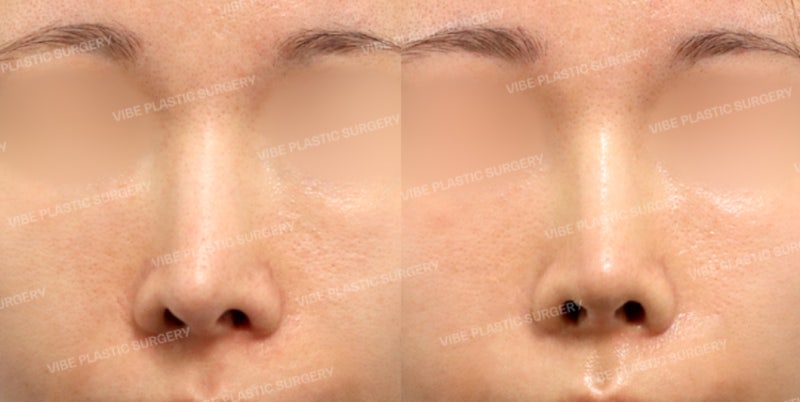
📍 Deviated Nose Correction Surgery
If the nose is bent in an S-shape or tilted to one side,
straightening the center
brings about a significant external change,
making it a highly satisfying surgery. Additionally, functional issues
like difficulty breathing are often improved together, which is why
it generally shows high satisfaction in rhinoplasty reviews. However,
it is a correspondingly difficult surgery.
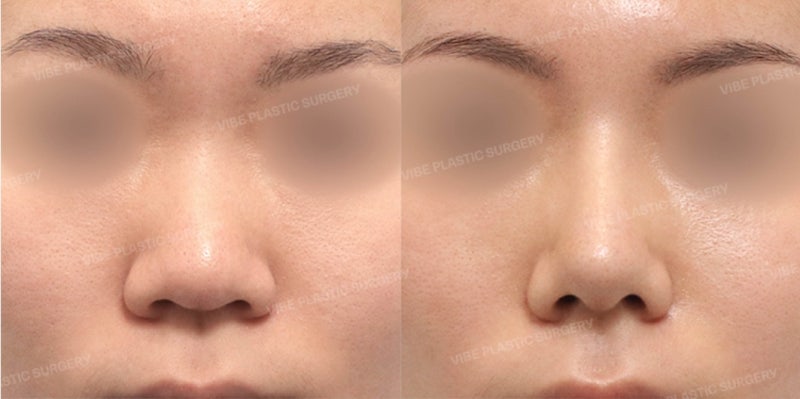
📍 Bulbous Nose Surgery
Bulbous nose surgery often involves thick skin and a lot of fat,
so there may be limitations to the surgical results.
Comparing before and after, the volume is reduced and the shape is improved,
but some may feel that the nose did not become
as small as they expected.
Therefore, expectation management is often discussed
as an important aspect in rhinoplasty reviews.
Rhinoplasty, what is important for satisfactory results?
Rhinoplasty is not simply a surgery to change
the height or shape of the nose, but a delicate surgery
that must consider the individual's nasal structure,
facial balance, and functional aspects together.
That is why, even when looking at various rhinoplasty reviews,
the results can vary depending on the surgical method
or individual conditions.
At Vibe Plastic Surgery, we thoroughly analyze the patient's nasal structure
and facial proportions before establishing a rhinoplasty plan
tailored to the individual.
"The nose is the center of the face."
Because even a small change can alter one's impression,
more careful consultation and an accurate surgical plan
are important. If you are planning rhinoplasty,
we hope you find the nose line that suits you
through professional consultation
along with various rhinoplasty reviews. :)
*Please also refer to the video below as it contains many detailed explanations. :)




Frequently Asked Questions
Why is rhinoplasty a difficult surgery?
Because the nose is located in the exact center of the face, even a slight misalignment is easily noticeable. It requires considering not only the external nose line and height but also internal structural issues like a deviated septum, and it demands a harmonious surgical technique and balance among the three structures: soft tissue, cartilage, and bone.
Why do people get revision rhinoplasty?
It is mainly considered when the surgical result differs from the expected shape or when complications occur. Specifically, revision surgery is chosen in cases of inflammation or infection, or when the nasal tip appears upturned or crooked. Sufficient consultation and careful planning from the beginning are crucial.
How can I reduce the side effects of rhinoplasty?
A customized plan that considers both surgical and patient factors is important. The nasal tip must be designed reasonably according to the patient's soft tissue and nasal structure, and basic hygiene management, such as maintaining a sterile environment, wearing gloves, and hand sanitization, also helps reduce the occurrence of inflammation.
Is deviated nose correction surgery highly satisfying?
Yes, the satisfaction rate is quite high. Straightening the center of a nose that is bent in an S-shape or tilted to one side brings about a significant external change, and functional issues like difficulty breathing are often improved together. However, it is a correspondingly difficult surgery.
What should I know about bulbous nose surgery?
A bulbous nose often has thick skin and a lot of fat, so there may be limitations to the results. Although the volume is reduced and the shape is improved after surgery, you might feel that the nose did not become as small as expected. Therefore, expectation management is often discussed as an important aspect in rhinoplasty reviews.
What materials are used for nasal tip surgery?
Septal cartilage, ear cartilage, and rib cartilage can be used. However, if the nasal tip is raised excessively without considering the patient's soft tissue and nasal structure, the tip may bend or collapse, so careful design tailored to individual conditions is necessary.