2026-05-18
Functional Rhinoplasty & Rhinitis Surgery: How to Improve Both Nose Shape and Breathing
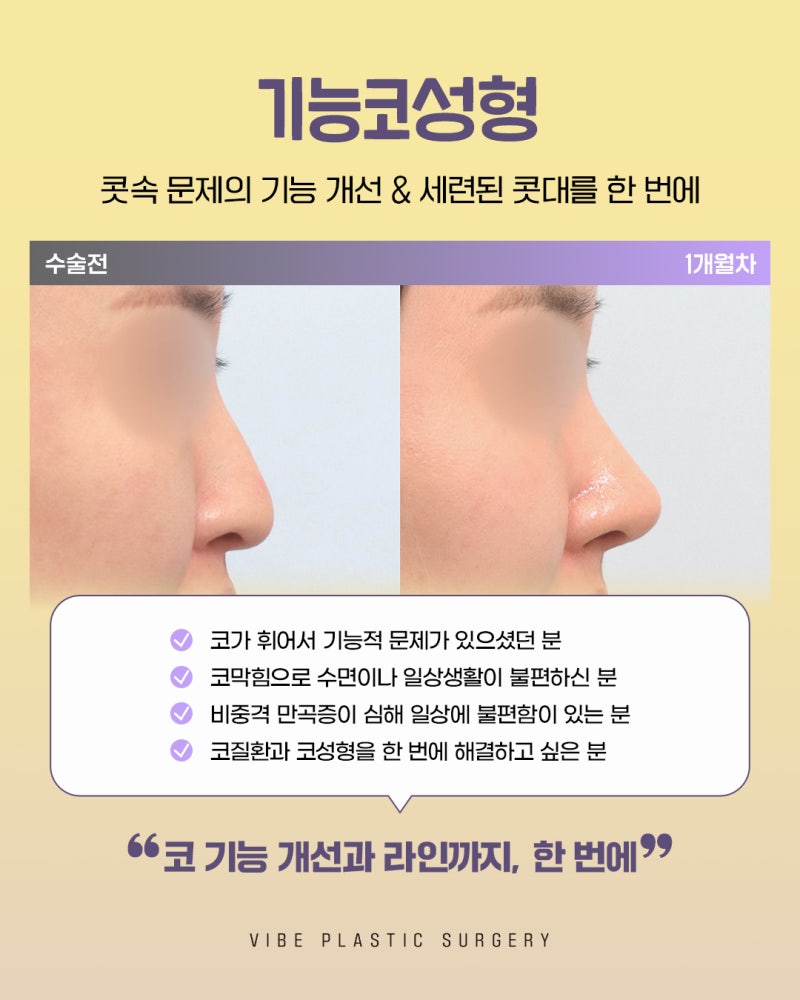
Rhinitis is divided into allergic and structural issues. Structural causes like a deviated septum, hypertrophic rhinitis, and nasal valve collapse can be improved with functional rhinoplasty. Functional rhinoplasty is a surgery that resolves both functional recovery and aesthetic improvement of the nose at once, and insurance coverage is possible depending on the conditions. It is important to confirm the right method for you through examinations and a specialist's diagnosis.

Hello, this is Vibe Plastic Surgery :)
🌼In spring, many people experience discomfort
due to rhinitis. During the change of seasons, symptoms like nasal congestion
and frequent sneezing tend to worsen easily.🤧
In particular, aside from allergic rhinitis, chronic rhinitis
causes significant inconvenience in daily life.
If you are worrying about functional issues caused by rhinitis
along with a complex about your nose shape,
you may have considered functional rhinoplasty.
Rhinitis nose surgery corrects the structural problems of the nose
to help you breathe comfortably,
while also improving your nose line.
Today, we will explain functional rhinoplasty,
which can solve both rhinitis and nose shape concerns at the same time.💜
🤧Do you know why rhinitis occurs?
The rhinitis we commonly know
can be broadly divided into two types.
✔️Allergic Rhinitis
First, allergic rhinitis is caused by specific 🦠allergens
and is not related to the structural problems of the nose.
Therefore, there is a limit to improving it solely through functional rhinoplasty or rhinitis surgery,
and it is usually treated in parallel with medication
and nasal spray treatments.
✔️Rhinitis due to Structural Problems
Deviated septum, hypertrophic rhinitis, and nasal valve collapse.
Rhinitis caused by structural problems is due to abnormalities in the internal structure of the nose,
so through functional rhinoplasty or
rhinitis surgery that corrects this, you can expect symptom relief
along with improved breathing. :)
👃🏻Internal Nasal Structural Problems that Cause Rhinitis
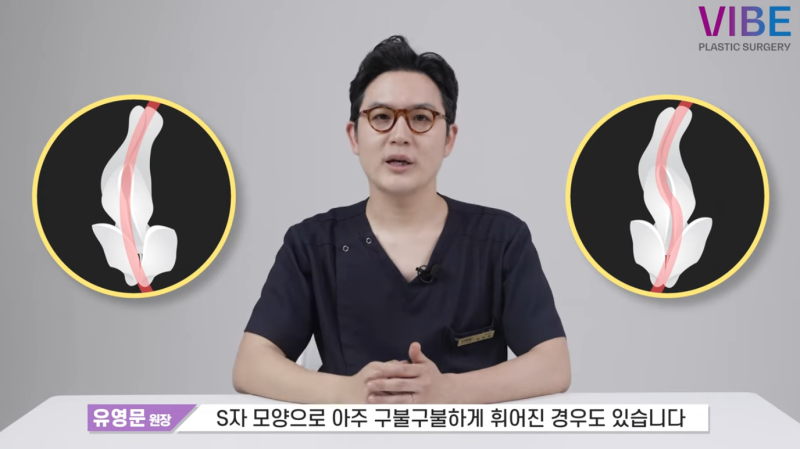
👃🏻Deviated Septum
This refers to a condition where the septal cartilage supporting the nasal bridge
is bent into a C-shape or S-shape. Because of this, the air passages
in both nostrils are not evenly secured, causing discomfort
when breathing.
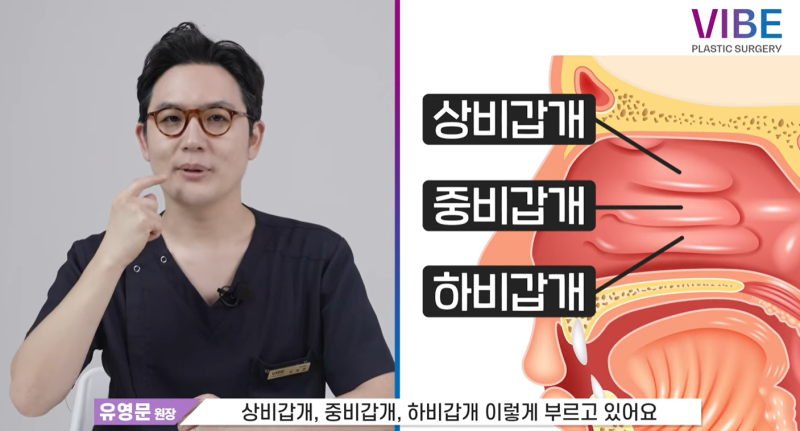
🌬️Hypertrophic Rhinitis (=Inferior Turbinate Hypertrophy)
Inside the nose, there is a turbinate structure that regulates
and purifies the temperature and humidity of the air.
In particular, the inferior turbinate easily swells in response to the external environment (dryness, cold air),
and if it becomes excessively enlarged,
it obstructs airflow and causes nasal congestion.

🌪️Nasal Valve Collapse
The nasal valve is a narrow air passage located at the upper inside of the nose
that plays an important role in breathing.
If this passage narrows due to the deformation
or thickening of the septal cartilage, breathing can feel stuffy
and uncomfortable.
Rhinitis caused by such structural problems of the nose
has limitations with simple treatments alone,
so you can consider fundamental improvement
through rhinitis surgery with functional rhinoplasty. :)
⁉️Understanding Functional Rhinoplasty Accurately
General rhinoplasty refers to aesthetic rhinoplasty
that creates external beauty by improving
the height, length, and tip shape of the nose. On the other hand,
surgery that restores the function of the nose by improving the causes of rhinitis,
such as a deviated septum, hypertrophic rhinitis, and nasal valve collapse,
is called functional rhinoplasty or rhinitis surgery.
Recently, a major advantage is that you can resolve breathing issues
along with aesthetic improvements at the same time, improving both
the shape and function of the nose in a single surgery.
🏥Functional Rhinoplasty, Is Insurance Coverage Possible?
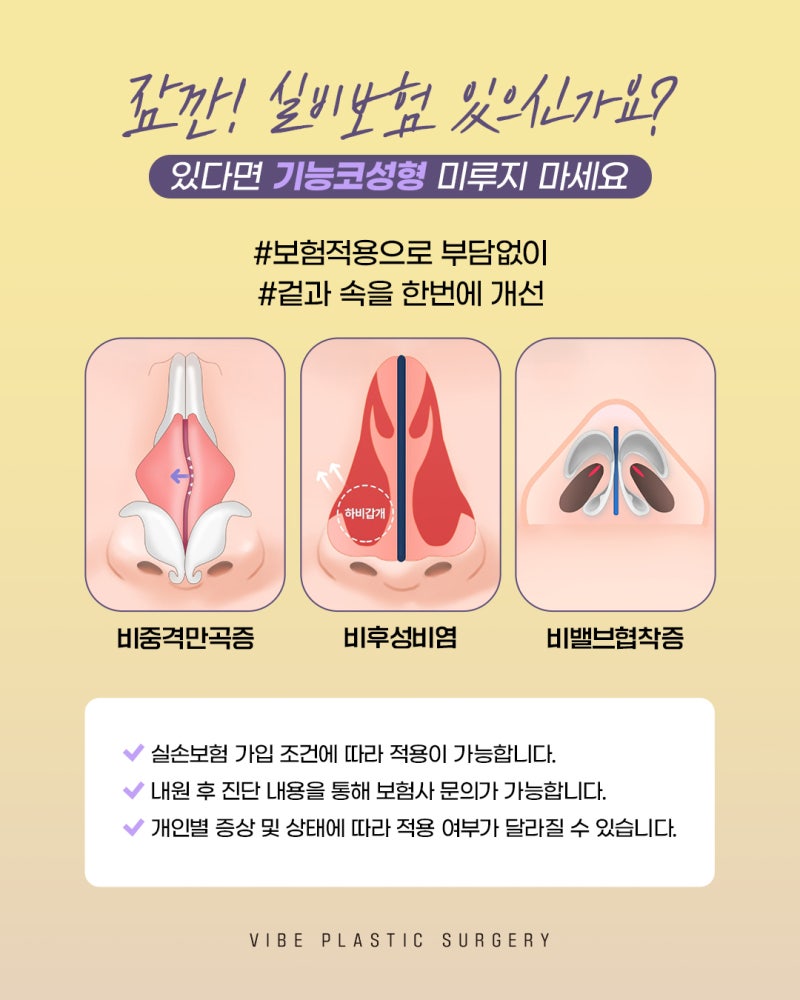
While it is difficult to apply insurance for cosmetic rhinoplasty,
functional rhinoplasty or rhinitis surgery can be covered
💳by insurance depending on the conditions.
Functional issues such as nasal congestion, rhinitis, sinusitis, deviated septum,
and nasal valve collapse must be confirmed,
and a specialist's diagnosis through CT or nasal endoscopy
is required. Also, it is important to check in advance
whether your private health insurance provides coverage.📝
Diagnosis through tests like CT and nasal endoscopy
⬇️
Proceed with surgery after confirming coverage with the insurance company
⬇️
Obtain relevant documents and submit them to the insurance company
⬇️
Receive insurance payout after the review of the submitted details
Functional Rhinoplasty: Improve Function and Achieve a Refined Nasal Bridge at Once!
Today, we learned about functional rhinoplasty.
Many people are showing interest
in the fact that it can improve
not only the shape of the nose but also breathing!
In particular, 🪖military personnel, for whom time management is crucial,
often use their vacation period to proceed
from examination to surgery, making it a method
that allows for efficient improvement.
If you have been experiencing discomfort due to nasal congestion or rhinitis,
we recommend considering the functional aspects
along with rhinitis surgery.
For more detailed consultations, Vibe Plastic Surgery
will assist you through a customized diagnosis
tailored to your individual condition. :)




Frequently Asked Questions
What is functional rhinoplasty?
It is a surgery that restores the function of the nose by improving the structural causes of rhinitis, such as a deviated septum, hypertrophic rhinitis, and nasal valve collapse. Its main feature is that it can resolve both aesthetic improvements and breathing issues simultaneously in a single surgery.
Can allergic rhinitis also be improved with surgery?
Allergic rhinitis is caused by specific allergens and is unrelated to the structural problems of the nose, so there is a limit to improving it solely through functional rhinoplasty or rhinitis surgery. It is usually treated in parallel with medication or nasal spray treatments.
What are the structural problems that cause rhinitis?
The most common are a deviated septum where the septal cartilage is bent, hypertrophic rhinitis where the inferior turbinate becomes excessively enlarged, and nasal valve collapse where the upper air passage inside the nose narrows. These structural abnormalities cause breathing discomfort and nasal congestion.
Is functional rhinoplasty covered by insurance?
While cosmetic rhinoplasty is difficult to cover, if functional issues such as nasal congestion, rhinitis, sinusitis, deviated septum, or nasal valve collapse are confirmed, insurance coverage is possible depending on the conditions. It is important to check in advance whether your private health insurance provides coverage.
What tests are needed before surgery?
A specialist's diagnosis through a CT scan or nasal endoscopy is required. After the examination, you confirm coverage with the insurance company and proceed with the surgery. Afterward, the process involves obtaining relevant documents, submitting them to the insurance company, and receiving the insurance payout after a review.
What is the difference between cosmetic rhinoplasty and functional rhinoplasty?
Cosmetic rhinoplasty is a surgery that improves external beauty, such as the height, length, and tip shape of the nose. On the other hand, functional rhinoplasty is a surgery that restores breathing function by correcting the structural problems that cause rhinitis, meaning they have different purposes.