2026-07-22
End Your Eye Reoperation Worries! Why Choose VIBE Plastic Surgery at Sinnonhyeon Station
Considering eye reoperation? VIBE Plastic Surgery at Sinnonhyeon Station offers expert care for unsatisfactory results, addressing issues like loose lines, asymmetry, and dissatisfaction with shape or height.
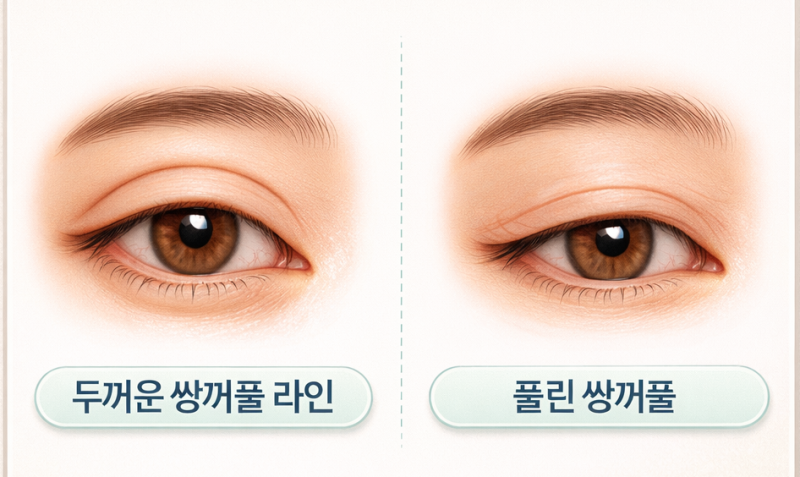

Hello from Sinnonhyeon Station Plastic Surgery,
this is VIBE Plastic Surgery :)
Sometimes, when you look in the 🪞mirror or
📸take a photo in your daily life, you might suddenly feel
that your eyes look different than before.
As time passes, changes like blurry lines,
asymmetry, or loosening of the line can lead you to
consider 👀eye reoperation.
Since you've already experienced surgery once,
the process of deciding again becomes even more cautious.
As the eyes are a crucial part that significantly impacts one's impression,
let's delve into the important aspects you shouldn't miss :)
💡Why do people undergo double eyelid reoperation?
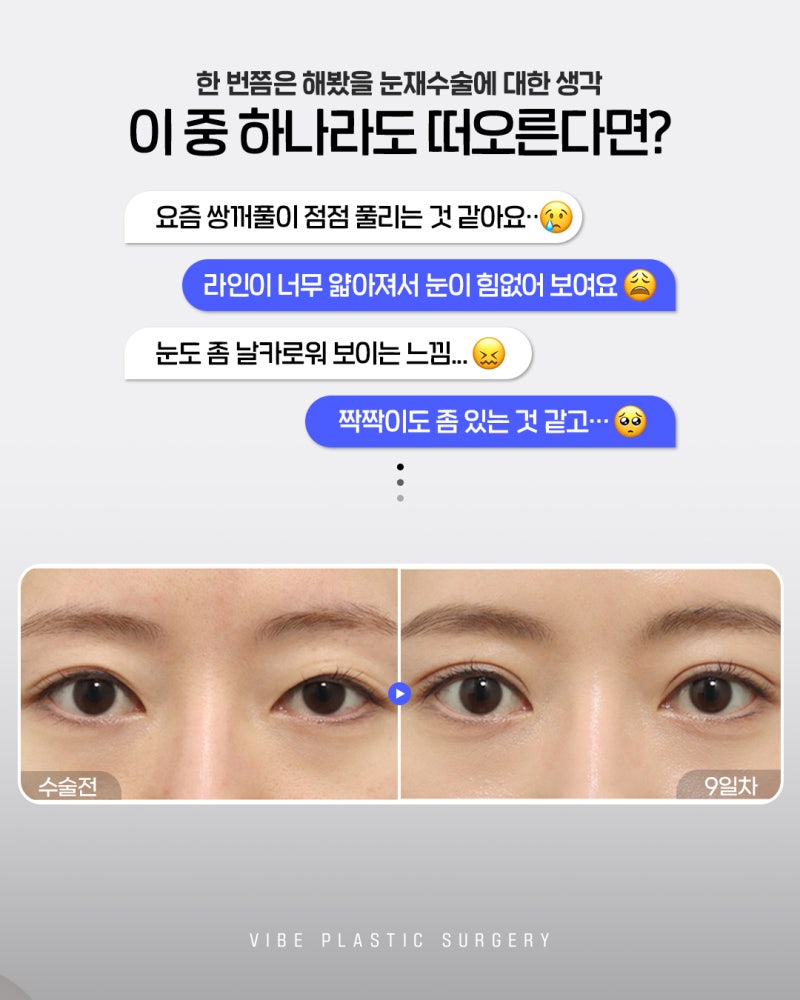
Some individuals who underwent natural adhesion or non-incisional surgery
find their lines loosening or coming undone over time,
leading them to visit VIBE Plastic Surgery at Sinnonhyeon Station for reoperation.
There are also quite a few who visit simply because they are
dissatisfied with the line itself. Fortunately, severe side effects
are not a common reason for visits.
In reality, most people consider reoperation due to dissatisfaction with
the line's shape or height, or left-right asymmetry 🥲
👀Common Causes Leading to Eye Reoperation
The most common reasons for reoperation after natural adhesion or buried suture methods
are dissatisfaction with the design and the line coming undone. Indeed,
most people who visit Sinnonhyeon Station Plastic Surgery fall into these categories.
If it's simply a matter of not liking the line,
non-incisional reoperation may be possible. However,
if the line has come undone, it's crucial to identify the cause.
If the power to open the eyes is weak, ptosis correction
may be necessary. If the skin is thick or
there's a lot of fat, an incisional method might be more suitable :)
🔢Is there a limit to the number of incisional double eyelid reoperations?
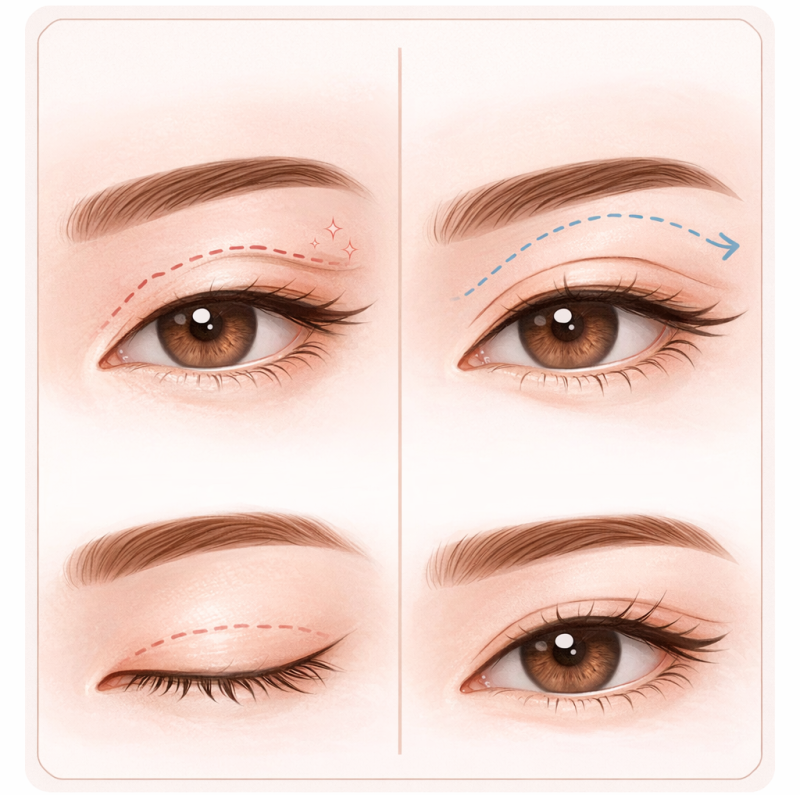
Incisional double eyelid surgery creates a line by incising the eyelid,
and there isn't a set limit to the number of reoperations. However,
as reoperations are repeated, the skin can become thinner,
and the available skin may decrease.
If a lot of skin was removed or the line was set high in the first surgery,
sufficient recovery time is needed before the next reoperation.
Conversely, if there's ample skin, multiple reoperations may be possible.
However, what's more important than the number of times
is to proceed with the surgery with an accurate plan from the beginning.
It's crucial to approach it in a way that reduces unnecessary reoperations.
At VIBE Plastic Surgery at Sinnonhyeon Station,
we accurately analyze each individual's eye condition
to minimize unnecessary reoperations
and aim for highly satisfactory results from the outset :)
💉How soon can reoperation be performed?
After double eyelid surgery, it's important to perform reoperation
only after both the external and internal tissues have fully recovered.
At VIBE Plastic Surgery at Sinnonhyeon Station,
we categorize reoperation timing into early correction and late correction.
If asymmetry is severe or there's a structural problem requiring
prompt correction, we recommend early correction within 2 weeks.
On the other hand, if it's simply swelling or part of the recovery process,
it's better to observe the progress rather than rushing into reoperation.
In this case, considering scar and tissue stabilization, we recommend
performing reoperation approximately 6 months later.
Eye Reoperation: Timing and Planning are Crucial

Double eyelid reoperation is not simply about
doing it quickly. It's important to make a decision after fully considering
the eye condition and recovery process. Choosing the correct
timing and method tailored to individual eye conditions
leads to highly satisfactory results :)
VIBE Plastic Surgery at Sinnonhyeon Station performs delicate, customized surgeries
based on extensive reoperation experience and tailored to each individual's eye condition 💜




Frequently Asked Questions
What are the main reasons for eye reoperation?
The main reasons for eye reoperation include dissatisfaction with the line coming undone, dissatisfaction with the line's shape or height, and left-right asymmetry. It's common for lines to loosen or come undone after natural adhesion or buried suture methods, and some consider reoperation simply because they don't like the line.
Is there a limit to the number of incisional double eyelid reoperations?
No, there is no set limit to the number of incisional double eyelid reoperations. However, as reoperations are repeated, the skin can become thinner and the available skin may decrease. Therefore, if a lot of skin was removed or the line was set high in the first surgery, sufficient recovery time is needed. If there's ample skin, multiple reoperations may be possible.
When is reoperation possible after double eyelid surgery?
It's important to perform reoperation after double eyelid surgery only after the internal tissues have fully recovered. If asymmetry is severe or there's a structural problem requiring prompt correction, early correction within 2 weeks is recommended. If it's simply swelling or part of the recovery process, it's best to consider scar and tissue stabilization and perform reoperation approximately 6 months later.
Is reoperation possible if I simply don't like the line?
Yes, it is possible. If you simply don't like the line, non-incisional reoperation may be an option. However, if the line coming undone is the cause, it's crucial to identify the underlying reason, as ptosis correction or an incisional method might be more suitable depending on the power to open the eyes or the skin condition.
What is the most important aspect of eye reoperation?
The most important aspect of eye reoperation is to proceed with the surgery with an accurate plan from the beginning to minimize unnecessary reoperations. Additionally, choosing the correct timing and method tailored to individual eye conditions, after fully considering the patient's eye condition and recovery process, leads to highly satisfactory results.