2026-09-23
Your Final Revision Rhinoplasty: Why Thoughtful Decisions Matter | Gangnam Revision Rhinoplasty at Vibe Plastic Surgery
Discover why careful planning and structural restoration are vital for your final revision rhinoplasty. Gangnam Vibe Plastic Surgery explains how 3D-CT analysis helps prevent repeat surgeries.
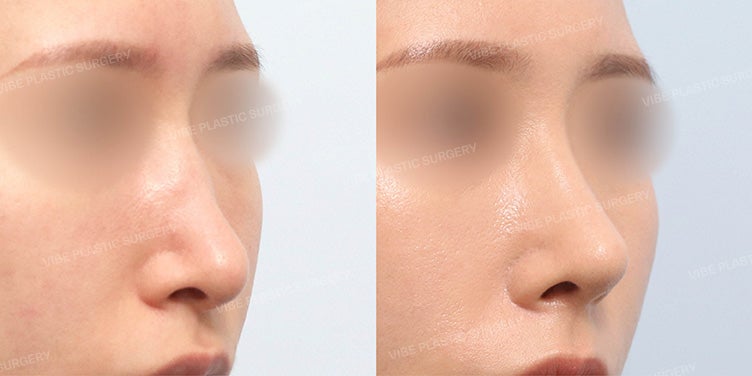

Hello, this is Vibe Plastic Surgery!
Since revision rhinoplasty means undergoing surgery once again,
it naturally demands far greater caution and consideration.
If you are contemplating revision rhinoplasty in Gangnam,
rather than simply aiming to change the nasal shape again,
it is crucial to pinpoint precisely what fell short in the previous surgery
and design a customized plan suited to the current condition of your nose.
Today, for those seeking their final revision rhinoplasty,
Vibe Plastic Surgery will share in detail what aspects you must evaluate first. 💜
Making this your last: Vibe starts by analyzing the root cause.
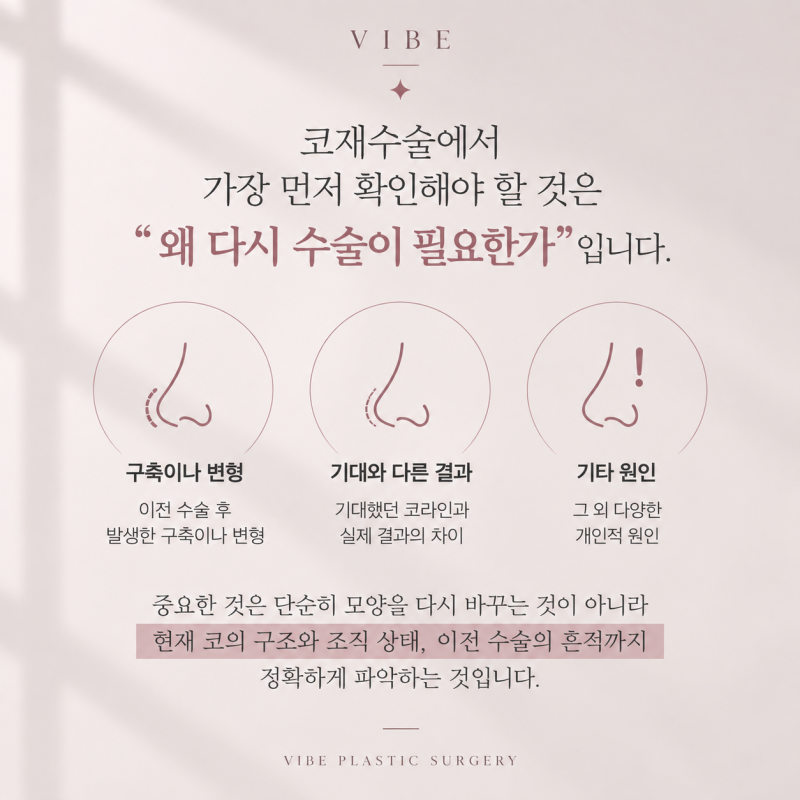
The very first question to answer in revision rhinoplasty is,
"Why do I need surgery again?"
It could be due to capsular contracture or deformities that developed after the previous procedure,
or perhaps a discrepancy between the expected nasal line and the actual outcome.
The key is not merely altering the external shape again,
but accurately assessing the current nasal architecture,
the condition of the soft tissue, and the surgical footprint left behind.
Proceeding without thoroughly examining these factors
runs the risk of requiring yet another revision surgery down the road.

At Vibe Plastic Surgery, a destination for Gangnam revision rhinoplasty,
we closely analyze the traces and tissue conditions from past procedures.
Based on restoring stable nasal function and structural support,
we design a natural, long-lasting nasal contour.
To ensure this single revision brings a definitive end to your surgical journey—
making it your truly "final revision rhinoplasty"—
we meticulously consider the precise surgical direction your nose requires.
Designed not just for another surgery, but for the final one.

Gangnam Vibe Plastic Surgery precisely evaluates
the pre-existing nasal framework, cartilage condition, and structural support
to plan the necessary corrective strategy,
ensuring any compromised structural integrity is reliably reinforced.
Furthermore, tailored to the current condition of your nose, we select the most suitable materials—such as autologous cartilage—
taking both long-term safety and structural durability into full consideration.
Looking beyond superficial cosmetic adjustments
to properly safeguard internal nasal architecture and breathing function
is what makes all the difference in revision rhinoplasty. :)
Precision analysis with 3D-CT: The foundation of revision rhinoplasty.
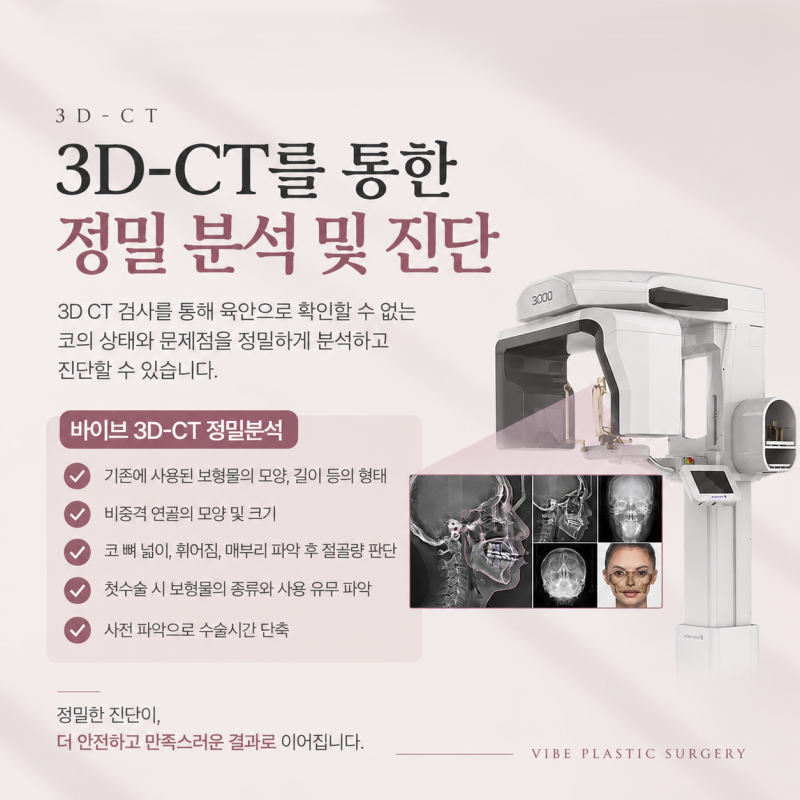
At Vibe Plastic Surgery in Gangnam,
we place paramount importance on identifying
what internal anatomical changes occurred following past surgeries.
Using high-resolution 3D-CT scans, we inspect internal features impossible to evaluate with the naked eye:
nasal framework, septal cartilage condition,
width and deviation of the nasal bones,
as well as the exact type, shape, and position of existing implants.
We then formulate an operative plan tailored to your current anatomy.
Pinpointing the exact cause for revision through this thorough diagnostic assessment
and establishing an individualized surgical plan
reflecting each patient's nasal anatomy and tissue quality
serves as the core clinical philosophy of Vibe Plastic Surgery. :)
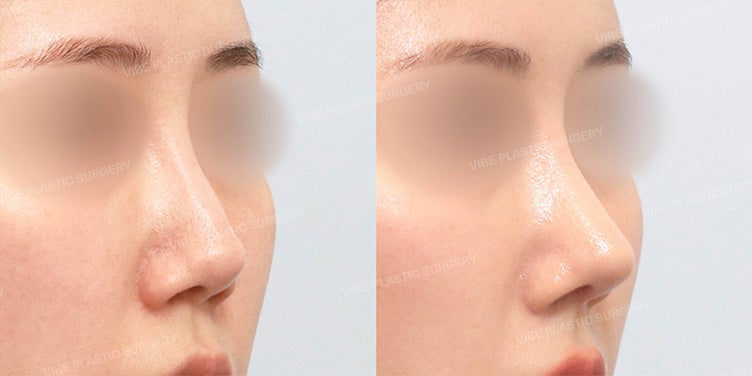
Make it your final revision rhinoplasty—partner with Vibe.
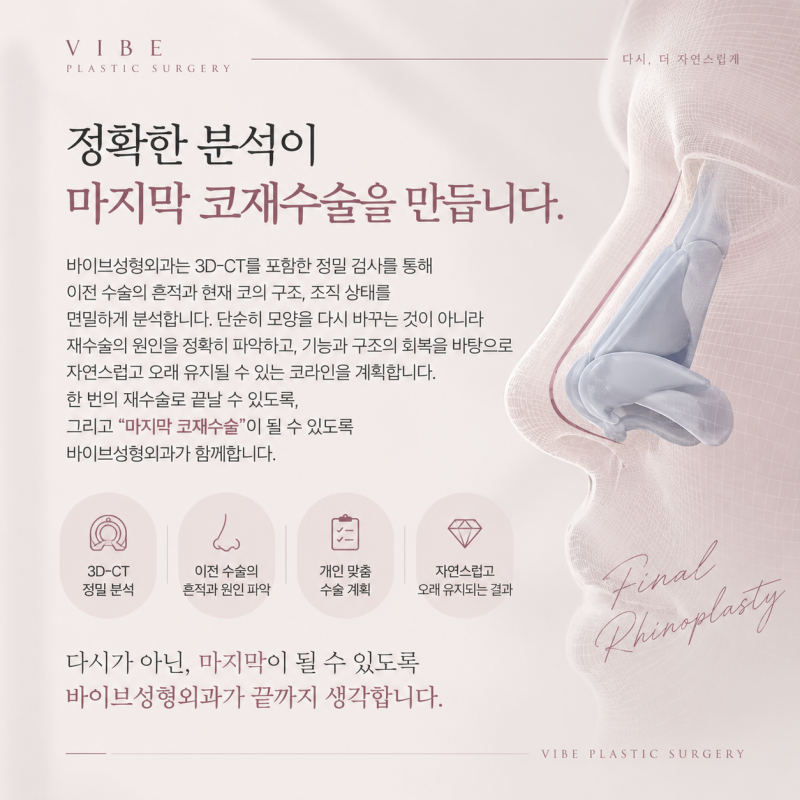
To relieve you of the emotional burden and stress of repeat surgeries,
Gangnam Vibe Plastic Surgery approaches every step with thorough, meticulous analysis right from the start.
A natural, enduring nasal profile;
not simply reshaping the exterior,
but combining structural restoration suited to your nasal condition
with harmonious, proportionate aesthetic design
to achieve a refined nasal line that stands the test of time.
From your initial consultation to full post-operative recovery, Vibe Plastic Surgery is dedicated to walking every step with you. 💜




Frequently Asked Questions
What is the very first step when considering revision rhinoplasty?
The first priority is to accurately diagnose why the previous surgery did not achieve the desired outcome. Pinpointing specific causes—such as contracture, deformity, or cosmetic dissatisfaction—and carefully analyzing the present structural and tissue conditions are vital to preventing the need for any further revision.
Why is 3D-CT imaging essential for revision rhinoplasty?
A 3D-CT scan allows for an accurate, in-depth evaluation of internal nasal structures that cannot be seen externally. It provides clear insights into the condition of the septal cartilage, nasal bone deviation, and the shape and placement of existing implants, enabling the surgeon to formulate a safe and precise surgical plan.
Why are structural and functional restoration so critical in revision rhinoplasty?
Simply altering the external appearance without addressing compromised internal support can lead to recurrent deformities over time. Reinforcing damaged structural foundations and addressing functional airway issues together ensures that the newly created nasal contour remains stable and lasts long-term.
What materials are commonly used in revision rhinoplasty?
Materials are selected depending on the patient's individual nasal anatomy and tissue status, with autologous cartilage often preferred. Considering structural durability and tissue compatibility, the surgeon selects the material that places minimal strain on surrounding tissues while providing optimal long-term support.